
CRM for Tradespeople Australia: Optimising Business Operations in 2026
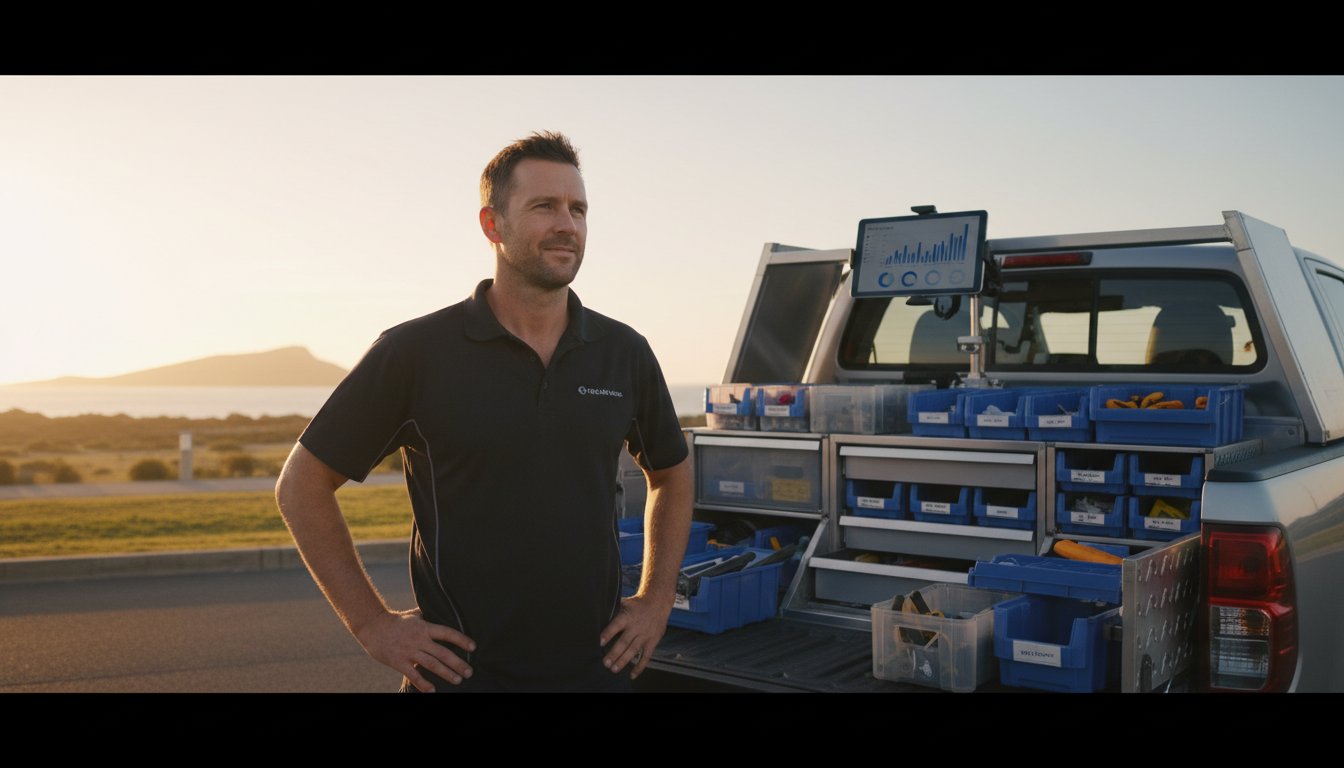
A 2024 industry analysis indicates that Australian trades businesses lose approximately A$25,000 in potential revenue every year because of delayed lead responses and administrative bottlenecks. You likely recognise the frustration of finishing a ten hour day on-site only to face a mountain of manual data entry and unreturned voicemails. It's an exhausting cycle that keeps you away from your family and prevents real business growth.
Adopting a modern crm for tradespeople australia solves these operational inefficiencies by automating your lead capture and ensuring every quote looks professional and arrives instantly. This technology allows you to reclaim up to 15 hours of your week while increasing your conversion rates through consistent, automated follow-ups. We will outline the specific workflow optimisations and automation tools you need to secure your market position and drive measurable results in 2026.
Solving the Administrative Burden in Australian Trade Businesses
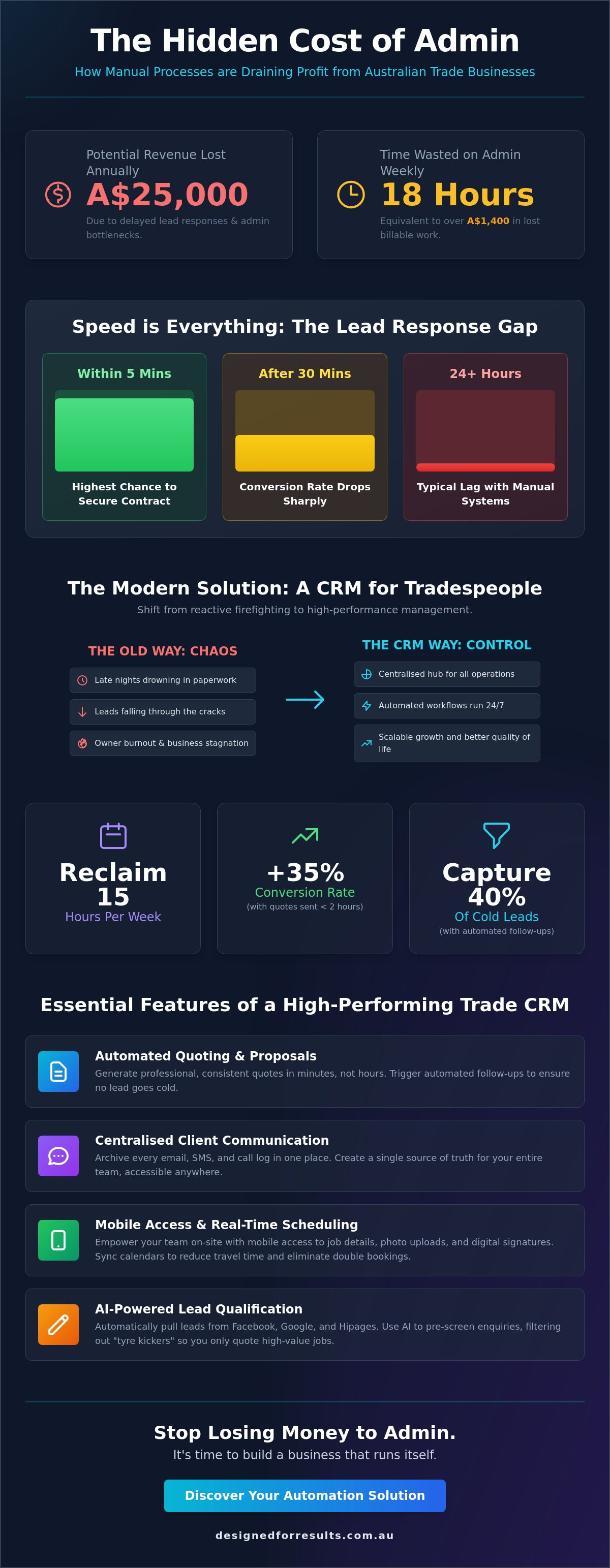
Administrative burden is a silent killer of profitability in the Australian trade sector. A 2023 report by the Australian Small Business and Family Enterprise Ombudsman indicates that small business owners spend up to 18 hours per week on compliance and administration. For a tradesperson charging between A$80 and A$150 per hour, this represents over A$1,400 in lost billable potential every week. Manual administration is a direct drain on capital that limits your ability to scale. Transitioning from fragmented spreadsheets to a centralised system is the first step toward reclaiming this lost revenue. Understanding What is CRM? provides the foundation for this transition, as it serves as a single source of truth for every customer interaction and project milestone. Implementing a dedicated crm for tradespeople australia shifts your operations from reactive firefighting to high-performance management.
The Reality of Manual Lead Management
Fragmented communication destroys the customer journey and leads to significant revenue leakage. When enquiries arrive via SMS, email, and various social media platforms, response times often lag by 24 hours or more. Data suggests that businesses responding to leads within five minutes are significantly more likely to secure the contract than those waiting even 30 minutes. Manual data entry and "phone tag" consume approximately 5.5 hours weekly for the average Australian business owner. These manual systems fail during periods of growth because they rely on the owner's memory rather than a repeatable process. Centralising these interactions ensures no quote falls through the cracks and every lead is tracked with precision.
Reclaiming Your Evenings from Paperwork
Operating a business after hours is a primary cause of burnout in the trade sector. Moving administrative tasks into an automated daytime workflow allows owners to finish their day when the tools go down. A digital pipeline provides immediate visibility into project statuses, eliminating the need to hunt through paper diaries or scattered spreadsheets. For businesses with unique requirements that standard software cannot meet, bespoke AI automation offers a way to tailor these workflows to specific operational needs. This level of organisation reduces the mental load, replacing late-night invoicing with a system that executes tasks while you are on-site. A robust crm for tradespeople australia transforms the business into a professional operation that runs independently of the owner’s constant manual input, allowing for measurable outcomes and a better quality of life.
Essential Features of a High-Performing Trade CRM
Australian business owners often lose 14 hours every week to manual administration and fragmented data. Implementing a high-performing crm for tradespeople australia eliminates this inefficiency by consolidating contact data for clients, subcontractors, and suppliers into one interface. This expert guide to CRM explains how these systems function as the central hub of a modern operation. Real-time pipeline visibility enables managers to see exactly where every lead sits, from the initial phone call to the final payment. Integrated scheduling systems sync directly with field staff calendars; this reduces double bookings and travel time. Mobile access is a mandatory requirement for teams working on-site across Australia. It allows for immediate job updates, photo uploads, and digital signatures while the technician is still at the property.
Automated Quoting and Proposals
Speed determines success in the Australian construction and service sectors. Delivering a quote within 2 hours of a site visit increases conversion rates by approximately 35%. Automated templates maintain professional branding and ensure pricing consistency across the entire workforce. These systems trigger automated follow-ups to capture the 40% of leads that typically go cold due to lack of contact. Businesses that implement these tools recover hours of their evenings previously spent on paperwork. It's often beneficial to explore smart AI solutions to automate these repetitive tasks and focus on higher-value work.
Centralised Client Communication History
Fragmented communication leads to errors and lost revenue. A high-performing CRM archives every email, SMS, and call log in one accessible location. This creates a reliable source of truth for the entire team. If a project manager isn't on-site, any staff member can view the history to provide informed, personalised service. Eliminating the need to search through personal inboxes saves the average office manager 5 hours every week. This level of organisation improves the customer journey and builds long-term loyalty by ensuring no detail falls through the cracks. Using a dedicated crm for tradespeople australia ensures that every interaction is recorded, allowing for better management and clearer project oversight across the business.
Integrating Automation and AI into Your Trade Workflow
Efficiency in a trade business depends on how well you remove yourself from the admin loop. Every hour spent on manual data entry is an hour lost on a billable site, which directly impacts the bottom line of an Australian business. Implementing a robust crm for tradespeople australia eliminates these repetitive tasks by acting as a central hub for all operational data. By 2026, the distinction between successful businesses and those struggling to scale will be the intentional use of automation to handle the heavy lifting of client management.
A modern CRM pulls leads from external sources like Facebook Lead Ads, Google Local Services, or Hipages automatically. This removes the risk of transcription errors and ensures every enquiry is logged the moment it is generated. Advanced lead qualification now uses AI to screen these enquiries before they reach your desk. The system asks pre-set questions regarding project scope, location, and budget. This process filters out "tyre kickers," ensuring you only spend time on high-value quotes that align with your service offering.
Automating document collection is another significant time-saver. Instead of chasing clients for site photos or compliance certificates—such as those required when working with ML Traffic Engineers Australia for site access planning—the CRM triggers automated requests at specific stages of the job. Integration with e-signature platforms allows for the instant finalisation of contracts. This digital-first approach reduces the administrative burden on the business owner and provides a professional experience for the client.
Speed to Lead: The Competitive Advantage
Research indicates that responding to a digital enquiry within five minutes makes you 21 times more likely to qualify that lead than if you wait 30 minutes. Most businesses fail this metric because they are on-site or driving between jobs. Setting up automated SMS and email sequences for new enquiries ensures the prospect receives an immediate acknowledgment. For business owners who cannot answer the phone during the day, bespoke AI automation can handle lead intake and scheduling 24/7, keeping the pipeline moving without manual intervention.
AI-Assisted Phone Systems and Follow-Ups
Manual note-taking during client calls is often inaccurate and time-consuming. Modern phone systems now record and transcribe conversations, feeding the text directly into the client’s profile within the crm for tradespeople australia. These systems identify action items automatically. If a client mentions a specific repair or a deadline, the system can trigger follow-up tasks for your team. Exploring smart AI solutions allows an Australian business to maintain perfect records and ensure no detail is overlooked during a busy week. This structured approach to communication builds trust and ensures project milestones are met with precision.
Selecting the Right CRM for Your Specific Trade Operations
Selecting a crm for tradespeople australia requires a cold assessment of your daily bottlenecks. You need a system that handles your specific workflow, whether that involves complex recurring maintenance or high-volume emergency call-outs. Avoid software that adds administrative layers without removing existing ones. The user interface must be intuitive enough for a technician to update on-site in under 60 seconds. High adoption rates are the only way to ensure data integrity. If your team resists the tool, your investment yields zero return.
Assess software based on its ability to handle your specific trade requirements. A plumbing business might need advanced scheduling for emergency leaks, while a commercial HVAC business requires detailed asset history and preventative maintenance logs. Every feature must serve a direct purpose in reducing the time spent on admin during your evenings. Direct evidence of utility is more valuable than a long list of unused features.
Calculate the total cost of ownership by including setup fees and the hours required for staff training. A system costing A$150 per month that saves five hours of manual data entry per week pays for itself immediately. Evaluate integration capabilities with your existing stack to prevent data silos. A platform that doesn't talk to your GPS tracking or supplier portals will eventually become a liability. Prioritise tools that offer open APIs or native connections to the hardware your team already carries.
Synchronising with Australian Accounting Standards
Australian businesses must prioritise two-way integration with Xero or MYOB. This automation eliminates the need for manual invoice creation. When a technician completes a job, the data should flow directly into your accounting software, ensuring your BAS preparation is accurate and timely. This reduces the 15% error rate often found in manual entry. Real-time synchronisation means your profit and loss statements reflect the actual state of your business every day, allowing for faster decision-making.
Scalability for Growing Teams
Your software needs to accommodate your growth without requiring a total system migration. Choosing a scalable crm for tradespeople australia ensures you can add more field staff without performance lag. Look for tiered user permissions to protect sensitive financial data as your team expands. A robust system handles a 300% increase in data volume without slowing down, keeping your operations lean. This foresight prevents the disruption of switching systems just as your revenue begins to climb.
Eliminating repetitive administrative tasks allows you to focus on high-value work and reclaim your personal time. You can explore how to streamline these processes by reviewing our bespoke automation solutions.
Professional Implementation: Ensuring Business Efficiency
Installing a CRM for tradespeople australia without expert guidance often leads to expensive technical debt. Data migration errors can result in lost client history or duplicated records, which disrupts daily operations. A 2023 industry study found that 43% of CRM projects fail to meet their initial goals because of poor initial configuration. Professional setup ensures your data remains clean and your team remains productive from the first day of use.
Success depends on aligning the software with your specific service delivery model. Most Australian businesses struggle with the transition from manual scheduling to digital automation. Expert implementers map out your current workflow to identify where bottlenecks occur. This prevents the common issue of staff spending more time managing the software than performing billable work. Training is essential for both management and field technicians. It builds confidence in the system and ensures every feature is used to its full potential. When your team understands the "why" behind the software, adoption rates increase significantly.
The Value of Professional Implementation
Generic configurations rarely solve the unique challenges faced by Australian businesses. A specialised setup addresses the specific nuances of local regulations and tax requirements. It builds a foundation for long-term growth by automating repetitive administrative tasks like lead follow-ups and quote reminders. You can learn more about Designed For Results and how our implementation process delivers measurable outcomes. We focus on creating systems that provide owners with their evenings back while improving the customer journey.
Ongoing Maintenance and Optimisation
Technology evolves rapidly. A system that works today might require updates in six months to maintain its efficiency. Monthly managed services provide the technical support needed to troubleshoot issues before they impact your bottom line. Regular reviews of your automation performance allow for fine-tuning. This ensures your CRM for tradespeople australia continues to deliver a high ROI as your business scales. It's about maintaining a high-performance culture where the software supports the people, not the other way around. If you're ready to stop working on admin during your weekends, book a strategy chat to discuss your business automation needs.
Secure Your Competitive Advantage Through Operational Excellence
Transitioning to a dedicated crm for tradespeople australia removes the friction that prevents business growth. Manual data entry and missed lead follow-ups drain your resources; however, automation restores hours to your week. Research from the Australian Bureau of Statistics suggests small business owners work an average of 50 hours per week, often due to heavy administrative burdens. We help you reclaim that time by implementing professional no-code workflows tailored to your specific trade operations. Our team focuses on measurable outcomes and technical implementation that ensures your software works effectively for your team. As specialists in Australian service-based business automation, we understand local market conditions and the necessity of a seamless customer journey. Automated systems manage your quotes and invoices, which moves your admin out of your evenings and into a structured process. It's a practical shift that allows you to focus on scaling your Australian business without the burnout.
Book your free automation strategy call today to discuss how we can help you recover your time and increase your revenue. We're ready to help you build a more efficient future.
Frequently Asked Questions
What is the best CRM for a small trade business in Australia?
ServiceM8 and Fergus currently lead the Australian market for small trade businesses due to their localised features. These platforms offer specific modules for job scheduling and onsite invoicing that align with Australian GST requirements. Selecting the right crm for tradespeople australia depends on your specific trade. ServiceM8 suits residential service businesses, whereas Simpro supports larger project-based operations with complex inventory needs and high-volume scheduling requirements.
How much does a CRM for tradespeople cost to implement?
Implementation costs for a trade CRM typically range from A$0 for basic self-setup to A$5,000 for professional migration and training. Monthly subscription fees generally start at A$9 per user for entry-level plans and can reach A$150 per user for enterprise-grade features. These figures reflect 2024 market rates for cloud-based software models. Investing in professional setup ensures your workflows are optimised and your data is migrated correctly from the start.
Can a CRM integrate with my Xero accounting software?
Yes, most leading trade CRMs offer seamless two-way integration with Xero to eliminate manual data entry. This connection pushes invoices, payments, and contact details directly into your accounting software. It reduces administrative errors by approximately 30%. This integration ensures your financial records remain accurate without the need for late-night data reconciliation. You'll maintain a clear view of your cash flow without manually updating multiple spreadsheets.
Do I need a CRM if I only have a small team?
Operating with a small team makes a CRM more critical because your administrative capacity is inherently limited. A centralised system prevents lead leakage and ensures that customer details aren't trapped in a single person's text messages or notebook. Small businesses using automation often reclaim 10 hours of admin time per week. This allows the owner to focus on billable work rather than chasing paperwork during their evenings and weekends.
How long does it take to set up a CRM and automate my workflows?
Initial setup for a standard trade CRM takes between two and four weeks for most Australian businesses. This timeline includes importing customer lists, configuring quote templates, and establishing basic automation for follow-ups. You'll see immediate efficiency gains within the first 30 days as repetitive tasks like SMS appointment reminders begin operating. Developing complex, custom workflows may extend this period, but the core system will be functional and productive very quickly.
Will a CRM help me win more quotes?
A crm for tradespeople australia increases quote conversion rates by ensuring no lead is forgotten. Automated follow-up sequences can increase win rates by 20% simply by prompting the customer three days after the initial quote. Professional, branded digital quotes that allow for instant online acceptance remove friction from the customer journey. You'll position your business as the most reliable choice by responding faster and more professionally than your competitors.
Is AI necessary for a trade business CRM?
AI isn't a requirement for operational success, but basic automation is essential for modern business efficiency. Many trades find that simple rules for scheduling and invoicing provide the most immediate return on investment. While AI can assist with advanced job costing or predictive maintenance, your priority should be solidifying your core workflows. Focus on automating the repetitive tasks that currently consume your time before exploring more advanced AI features.
How do I get my team to actually use the new CRM system?
Secure team buy-in by demonstrating how the system reduces their daily friction and eliminates redundant phone calls. Provide structured training sessions and select a champion within the team to assist others during the transition. When staff see that the CRM handles their timesheets and site photos automatically, they'll adopt the tool. Success depends on showing the team that the technology makes their physical work easier to manage and record.
