
Auto Reminders to Chase Warm Leads: The 2026 Guide for Australian Businesses

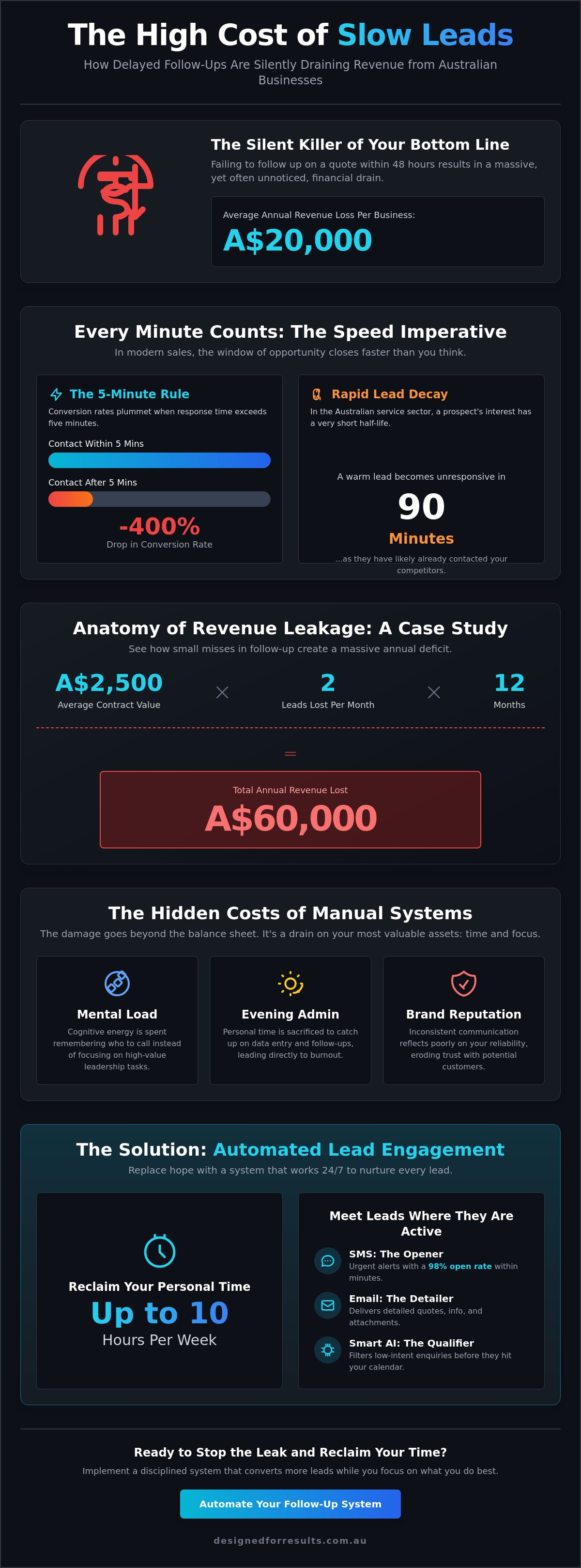
Australian business owners lose an average of A$20,000 in potential revenue annually simply because they fail to follow up on a quote within 48 hours. You likely recognise the exhaustion of finishing a long day on the tools only to face a mountain of administrative tasks during your evening. Implementing auto reminders to chase warm leads solves the common struggle of watching a prospect turn cold while you're busy managing staff or completing a project. Manual lead management often results in inconsistent results. It drains your bottom line.
This article demonstrates how to build automated systems that return up to 10 hours of personal time to your weekly schedule. We'll explore the specific steps needed to bridge the gap between sending a quote and securing a deposit. You'll learn how to create a systematic communication flow that keeps your business top-of-mind for prospects without requiring a single manual email or phone call from your desk.
The Financial Impact of Delayed Lead Follow-Up
Auto reminders to chase warm leads represent a disciplined system for maintaining consistent prospect engagement. This is not about passive notifications; it is a structured communication architecture that ensures no opportunity is ignored. In the Australian service sector, lead decay happens rapidly. A warm lead often becomes unresponsive within 90 minutes of the initial enquiry because the prospect has already contacted multiple competitors. Effective lead management requires immediate action to secure a high-performance sales culture and measurable outcomes.
Australian businesses often struggle with the transition from lead generation to lead conversion. While marketing efforts might bring prospects to the door, the lack of a systematic follow-up process results in wasted investment. Implementing auto reminders to chase warm leads ensures that the momentum generated during the initial interest phase is not lost to administrative friction or simple forgetfulness. This level of intentionality separates high-growth businesses from those that remain stagnant due to operational bottlenecks.
The Five-Minute Rule in Modern Sales
Conversion rates drop by 400% when a response takes longer than five minutes. By 2026, Australian consumers expect immediate acknowledgement. A delayed response signals operational inefficiency and tells the prospect that their business is not a priority. Businesses that automate this initial touchpoint achieve significantly higher conversion rates compared to those relying on manual outreach. This speed establishes professionalism before a human even picks up the phone. It transforms the customer journey from a source of frustration into a seamless experience that builds trust from the first interaction.
Revenue Leakage in Manual Systems
Manual lead tracking is a primary source of revenue leakage for small to medium-sized Australian businesses. Consider a business with an average contract value of A$2,500. Losing just two prospects per month due to forgotten follow-ups results in an annual revenue loss of A$60,000. This is a direct hit to the bottom line that could be mitigated through bespoke automation solutions.
- Mental Load: Owners spend cognitive energy remembering who to call instead of focusing on leadership capability.
- Evening Admin: Manual systems force managers to catch up on data entry during personal time, leading to burnout.
- Brand Reputation: Inconsistent follow-up reflects poorly on local brand reliability, which is critical in the Australian market.
The cost of a manual system is not just the lost sale. It is the cumulative weight of repetitive administrative tasks that prevent the business from scaling. When follow-up is left to memory, the customer journey becomes fragmented. Success becomes a product of luck rather than a result of structured execution. By removing the reliance on human memory, businesses reclaim their time and ensure every lead is treated with the same level of professional rigour.
Mechanics of Automated Lead Engagement Systems
Effective lead management relies on immediate action. When a prospect engages with your website, the system triggers a sequence of auto reminders to chase warm leads before the enquiry cools. This process transitions a lead from a passive submission to an active conversation without manual intervention from the business owner. High-performing systems distinguish themselves by moving beyond simple auto-responders. They use logic-based triggers to determine the next best action based on the lead's specific requirements or service interest.
Centralise your data to ensure lead warmth is maintained through context. Storing every interaction in a single location allows the system to identify intent. If a lead clicks a link in an email but doesn't book, the system recognises this activity and adjusts the follow-up frequency. This level of precision prevents the administrative burden that occurs when an Australian business owner tries to manage follow-ups via spreadsheets or manual notes during their evenings.
Multi-Channel Communication Workflows
Coordinate different channels to meet the lead where they are most active. SMS serves as the primary tool for urgent alerts, as industry data shows Australian consumers open 98% of text messages within the first few minutes. Email provides the necessary space for detailed service information, quotes, and attachments. Integrating smart AI solutions allows the system to handle initial qualifying questions, filtering out low-intent enquiries before they reach your calendar. Maintaining brand consistency across these touchpoints ensures the professional image of the business remains intact, regardless of whether the communication is automated or manual.
CRM Integration and Lead Tracking
Connect website forms directly to a centralised lead management system to eliminate data entry errors. This integration automates the transition from a 'new enquiry' to a 'booked consultation' by providing a direct booking link as soon as the lead qualifies. Track every automated text and manual phone call to maintain a clear audit trail. This transparency allows for better decision-making regarding marketing spend and sales performance. If you want to refine your current process and reclaim your time, you can speak with our team to review your workflow.
Critical Triggers for Automated Reminders and Follow-Ups
Revenue leakage occurs most frequently in the gaps between customer interest and business action. For an Australian business, the cost of a missed lead isn't just the lost immediate sale; it's the lifetime value of a client who goes to a competitor. Manual follow-up is inconsistent and scales poorly. By implementing auto reminders to chase warm leads, you replace hope with a repeatable system that operates 24/7. This ensures that every prospect receives a professional touchpoint regardless of how busy your team is on a job site or in a meeting.
Immediate Response Triggers
Speed to lead is the most influential factor in closing a sale. Industry data suggests that responding to an enquiry within five minutes makes you 21 times more likely to qualify that lead compared to waiting 30 minutes. You can't always be by the phone, so automation must step in. Setting up an 'Instant Call Back' feature for website forms connects your team to a prospect while their intent is at its peak. If a call is missed during business hours, AI voice agents can engage the caller immediately to qualify their needs or book a consultation. Following this with an immediate SMS confirmation for any bookings reduces no-show rates by 35% in service-based industries.
Post-Quote and Proposal Reminders
The period after sending a quote is where many Australian businesses lose control of the sales process. You've done the hard work of quoting, but the lead goes quiet. This silence often stems from the prospect being busy rather than disinterested. A structured reminder sequence keeps your business top-of-mind without requiring manual effort. You should follow this logical sequence to maintain momentum:
- 72-Hour SMS Check-in: Trigger an automated text three days after the proposal to ask if they have specific questions. SMS has a 98% open rate, making it more effective than email for quick clarifications.
- 5-Day Value Delivery: Send a brief case study or a link to a relevant project gallery via email to reinforce your expertise and build trust.
- 7-Day Internal Escalation: If there's no digital engagement after a week, the system should automatically create a manual task in your CRM for a direct phone call.
This tiered approach ensures you focus your personal energy only on the leads that require a human touch. It eliminates the need for late-night admin sessions and allows you to reclaim roughly 10 hours of your week. Using auto reminders to chase warm leads transforms your sales process from an exhausting chore into a high-performance asset that drives consistent revenue.
Implementing Automation Without Losing the Human Touch
Effective automation mirrors a natural professional conversation. It functions as a digital extension of your office, ensuring every prospect receives a timely response without the owner spending every evening on admin. Australian businesses often lose revenue because manual follow-up is inconsistent. Using auto reminders to chase warm leads ensures no prospect falls through the cracks while you focus on high-value delivery.
Automation should never sound like a broadcast. It requires a steady, logical rhythm that moves a lead closer to a decision. Successful implementation involves setting up triggers that respond to specific actions, such as a lead downloading a quote or visiting a specific service page on your website. This approach maintains professional standards while removing the burden of repetitive data entry.
Personalisation at Scale
Dynamic fields allow your systems to insert specific lead details into automated messages. A message that references a specific service, such as a "residential solar installation" or "commercial plumbing audit," carries more weight than a generic greeting. Tailor your follow-up sequences based on the specific category of service requested. This relevance proves you've listened to their needs.
Keep your copy concise and direct. Respect the prospect's time by getting straight to the point. Data from 2025 suggests that short, punchy emails under 100 words receive 20% higher response rates in the Australian service sector. Use clear language that reflects your professional voice. Avoid robotic templates that feel cold or disconnected. Every automated touchpoint should provide value, whether it's a helpful link or a simple check-in to see if they have questions about their quote.
Knowing When to Intervene
Automation manages the early stages of the sales process, but human intervention remains the closer. Design your workflows to notify the business owner the moment a lead displays high-intent behaviour. If a prospect opens a quote three times in 24 hours, the system should trigger an immediate internal alert for a manual phone call. This ensures you spend your limited time talking to the people most likely to buy.
Use automation to filter out "tyre-kickers" before you commit to a site visit or a long consultation. By asking qualifying questions through an automated form, you ensure your manual outreach is reserved for high-quality opportunities. For complex sales cycles that require multiple touchpoints over several months, a bespoke AI automation approach manages the nuance of long-term nurturing without losing the personal connection. This balance gives you your time back while improving the customer journey.
Over-automation leads to a disconnected brand. If every interaction feels like a transaction with a machine, trust erodes. Monitor your sequences regularly to ensure the tone remains helpful and supportive. When auto reminders to chase warm leads are integrated correctly, the prospect feels prioritised rather than processed.
Reclaiming Your Time Through Systematised Follow-Up
Manual lead management acts as a silent tax on your business's growth. Australian business owners often spend upwards of 7 hours per week on basic follow-up tasks, according to recent service-sector productivity data. This time is stripped away from strategic leadership and high-value service delivery. By deploying auto reminders to chase warm leads, you replace manual effort with a reliable mechanism that operates around the clock. This shift allows you to move from administrative survival to a focus on measurable business expansion.
Eliminating the Evening Admin Burden
The 8:00 PM admin session is a common reality for many service-based businesses in Australia. It's the time when quotes are finally sent and follow-ups are drafted. This manual approach is not only exhausting but also prone to inconsistency. Automation transitions your role from the primary worker to a system supervisor. Your pipeline continues to advance while you are off-site or attending to family commitments. This ensures a sustainable work-life balance while maintaining a high level of professional responsiveness. Reliable technology handles the repetitive outreach, so you only step in when a prospect is ready to commit. You no longer need to remember who to call; the system handles the memory for you.
Building a Scalable Sales Infrastructure
True growth requires a system that functions independently of the owner's physical presence. Standardising your sales process ensures every lead receives a premium, high-touch experience regardless of how busy the office becomes. This consistency builds a professional reputation that drives referrals and long-term loyalty. Leveraging lead follow up systems allows an Australian business to handle a 35% increase in lead volume without hiring additional administrative staff. This efficiency directly impacts the bottom line by keeping overheads low while increasing conversion rates. It's about designing a path for growth that doesn't rely on luck or extra hours. By removing the manual burden, you create a business that is a valuable asset rather than just a second job. If you want to see how these tools fit into your specific workflow, start a conversation about custom business automation and reclaim your time today.
Secure Your Competitive Advantage in the Australian Market
Stop letting potential revenue slip through the cracks of a manual follow-up process. Research from Velocify shows that responding to a lead within five minutes increases conversion rates by 391 percent. For most Australian business owners, achieving this speed manually while managing daily operations is impossible. Implementing auto reminders to chase warm leads ensures no prospect is forgotten, even when you're off the clock. Our approach focuses on no-code and AI-integrated solutions that reclaim your evenings by removing repetitive administrative tasks. We specialise in helping Australian SMEs achieve measurable ROI through systems that enhance the customer journey without losing personal connection. Reliable execution drives consistent growth.
As specialists in Australian business automation, we focus on reclaiming your time and driving bottom-line results. Take the first step toward a more efficient operation today. Every lead represents a significant investment; protect that investment with a system that never sleeps.
Book your free automation strategy call with Designed For Results
Your business deserves a system that works as hard as you do.
Frequently Asked Questions
How often should I follow up with a warm lead without being annoying?
Follow up five to seven times over a 14-day window to maximise conversion rates. Research from the Lead Response Survey indicates that 78% of customers buy from the first business to respond. Start with an immediate response; then schedule reminders at day two, four, seven, and 14 to maintain visibility without becoming intrusive.
What is the best software for auto reminders for small businesses?
Select a platform like HubSpot, Pipedrive, or Monday.com, as these offer robust automation features for the Australian market. These tools allow you to set up auto reminders to chase warm leads based on specific triggers, such as a quote being opened or a contact form submission. Ensure the software integrates with your existing email and calendar systems to consolidate your workflow.
Can I use SMS for lead follow-up in Australia?
SMS is highly effective in Australia provided you comply with the Spam Act 2003. You must include a clear opt-out mechanism and identify your business in every message. With open rates often exceeding 90%, SMS ensures your message is seen quickly by busy clients who might ignore emails during their workday.
How do I make automated reminders sound like they came from a person?
Use dynamic tags to insert the lead's first name and specific details about their enquiry. Write in a conversational tone and mention a specific action, like checking if they had questions about the quote you sent on Tuesday. This approach removes the robotic feel and builds a genuine connection with the prospect.
What happens if a lead replies to an automated SMS or email?
Configure your automation to stop immediately once a reply is detected. This prevents the system from sending further chase messages that would confuse the recipient. The reply should route directly to your inbox or CRM, allowing you to take over the conversation manually and close the sale.
Is it expensive to set up an automated lead follow-up system?
Entry-level automation tools often start around A$30 to A$70 per month for an Australian business. While there's an initial time investment to map your process, the return on investment is significant. Automating these tasks can save owners over 10 hours of admin per week, directly increasing the capacity for billable work.
Do I need a CRM to use auto reminders for my leads?
A CRM is the most efficient way to manage auto reminders to chase warm leads, though it's not strictly mandatory for very low volumes. You could use standalone email marketing tools or SMS gateways, but a CRM centralises lead data and history. This centralisation ensures you don't lose track of prospects as your business grows.
